
State-wide i-Tree Canopy Survey

State-wide i-Tree Canopy Survey

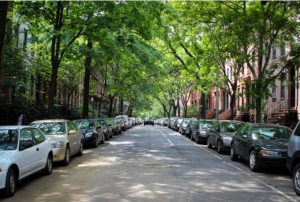
Treed residential street


West Virginia TCUSA iTree Canopy Survey – 08-17-2017

Now that i-Tree Eco is available throughout Europe (once local required data has been submitted, e.g. local air pollution stats), examples of how i-Tree is currently being used globally can provide interesting food for thought. The State of West Virginia conducted an i-Tree Canopy Survey, using data from 16 Tree City USA cities. Tree City USA is a national program that provides a framework for urban and community forestry management throughout the US. Many thanks to the authors of the study: Matthew Walker, Angela Sakazaki, Robert Eckenrode, Gregory Dahle as well as the West Virginia Division of Forestry, Urban Forestry for sharing the report with EFUF and to Greg Dahle for his assistance.

State-wide i-Tree Canopy Survey

August Urban Forest Webinar Schedule

AUGUST WEBINAR

The following additional webinar information was just received:

Title:  i-Tree Web Learning Workshop – Impacts in a Changing Atmosphere
Date & Time:  Wednesday, 30 August, 6:00PM BST, 7:00PM CEST, 8:00PM EEST.
This August i-Tree workshop will look at the value of trees during a time of upheaval and change – from global climate to social, economic and cultural. Whether examining rapid global climate change, long term impacts to natural systems, public health, community development or the economy, trees and vegetation play a remarkable role in the sustainability of natural, cultural and physical systems. Join this informative webinar to learn important tips to maximize the value of i-Tree outputs in the development of strategies for addressing change in your local community or globally, across the plant.

PRE-REGISTRATION is required for this session in order to provide the most streamlined user experience.  GO TO THIS LINK TO REGISTER:

https://goo.gl/7vVQHY


Seminar “City of Trees – Bringing Trees to the People of Greater Manchester” (30Aug2017)

Seminar “City of Trees – Bringing Trees to the People of Greater Manchester” (30Aug2017)

92e2e18a-b60e-4e93-ac21-631b81ceee0a.pngCity of trees.
Bringing trees to the people of Greater Manchester
A seminar with Peter Stringer, Brian Cosgrove, Ben Iles-Smith and Miranda Clarke.
30th Aug at Barcham Trees


9.00am – Registration and tea / coffee refreshments
9.30am – 9.35am – Welcome to the day and ‘My Tree Rocks Challenge’ – Pete Stringer
9.35am – 10.00am – City of Trees a new movement for Greater Manchester – Pete Stringer
10.00am – 10.20am – An evidence based mapping approach to tree planting – Bryan Cosgrove
10.20am – 11.00am – Workshop 1 – Exploring your local Tree Heritage
11.00am – 11.20am – Tea break
11.20am – 11.50am – Green Streets – Turning the streets from grey to green – Pete Stringer
11.50am – 12.30pm – Workshop 2 – Every tree tells a story
12.30pm – 1.30pm – Lunch and opportunity to visit nursery
1.30pm – 2.00pm – What Have Trees Ever Done for us? Demonstration & research – Pete Stringer
2.00pm – 2.40pm – Workshop & Tea Break – Mocktail making, an ice breaker for community engagement
2.40pm – 3.00pm – Of the people by the people for the people – Community Woodland Management – Bryan Cosgrove (includes
Citizen Forester)
3.00pm – 3.20pm – Question and answers to the team
3.20pm – 3.30pm – Summary, winner of ‘My Tree Rocks’ challenge and close

Please see for full details http://www.barchampro.co.uk/sites/default/files/6_city_of_trees_30th_aug.pdf

To register your interest please email natasha@barchamtrees.co.uk
or Click Here

Can closer ties to Europe benefit British trees?

Can closer ties to Europe benefit British trees?

This is a reprint of an article in HorticultureWeek

Case made by European Young Forester of the Year winner John Parker of TfL.

Avenguda Rosel in Barcelona - image: Ann Hallgren/ Creative Commons Licence
Avenguda Rosel in Barcelona – image: Ann Hallgren/ Creative Commons Licence

British arboriculture can benefit from closer association with European industry and research, according to London Tree Officers Association (LTOA) chair John Parker, who was named European Young Urban Forester of the Year 2017 at the European Forum on Urban Forestry (EFUF) conference in Barcelona, Spain, earlier this month in honour of his work at UK and European level.

Parker, who is also senior technical specialist for arboriculture and landscape at Transport for London (TfL), says: “Winning this award is an unbelievable honour for me personally and a fantastic acknowledgement of the national and international work that the LTOA has been doing.”

The award also recognises his own work in bringing the fields of arboriculture and urban forestry together. “The two terms are pretty interchangeable here — my degree is in both — and in London we consider the ‘urban forest’ to be every tree, private and public, on streets, in parks or gardens,” he tells Horticulture Week.

“But in Europe the urban forest tends to be peri-urban and so doesn’t include individual street trees, which are managed by arborists.” Reflecting this at institutional level are the separate European Arboricultural Council (EAC) and EFUF, which “don’t seem to work together that much” despite considerable overlap in disciplines, he notes.

In attempting to bridge this gap, Parker, who sits on the EFUF steering group, now also represents the forum at the EAC “and may end up performing the opposite role as well”, he says.

Halfway through his two-year LTOA chairmanship, “broadening the association’s work both nationally and internationally has also been my thing there”, he adds. For example, the LTOA has worked as the lead UK organisation on canker stain of plane (Ceratocystis platani), publishing professional guidance on dealing with the pathogen, which has devastated trees in areas of southern Europe and now threatens the plane trees for which London is famous.

“At first we didn’t know what we were doing with it. It was only by talking to our European colleagues who have dealt with it for decades that we learned,” says Parker.

But the information flow is not just one-way, he adds. “At the Barcelona conference I gave a presentation on surface materials around trees in hard landscapes, based on our work at the LTOA.

This was of interest to many colleagues there, who may have been using the same surface materials indiscriminately.” Though it has yet to be formally launched, the online paper has already been downloaded as far away as North and South America and the Far East, he adds.

On his impressions of other forum presentations, Parker says: “It broadens the mind. There are people doing amazing things. With academic research it can take time to work out how to apply it.

But there was some work on community engagement in Barcelona and about species selection for urban environments that I can take back to TfL. So it goes both ways.”

Explaining how he combines these responsibilities with the day job, he says: “I get good support for this from TfL, but it’s done in my own time and largely at my own cost, including getting to Barcelona.”

On urban trees and the consequences of the general election (8 June), he says only: “The challenge is to continue to raise awareness among ministers and people like the mayor of London of their value, to keep pushing and to keep using the language of green infrastructure and environmental services. But it’s local residents who are the voters and so they are the ones that politicians listen to, and who can apply the pressure.”

Each year since 1998 the EFUF has brought together practitioners, policymakers, managers, educators and researchers in urban forestry, urban greening and green infrastructure, including from beyond Europe, to discuss new developments and to visit examples of good practice.

Under the title Urban Forest Boundaries: Within, between and beyond the city”, the 20th forum addressed issues including ecological connectivity, compatibility of ecosystem services, biodiversity and disturbances, and the social aspects of forest management and planning in peripheral areas. The forum will be held again next May in Helsinki and Vantaa, Finland.

The LTOA guide Surface materials around trees in hard landscapes “details the relative merits of bound gravel, grilles, organic and inorganic mulches, rubber crumb, soil and asphalt, pointing out:

“Each has its advantages and disadvantages and no single material is right for every scenario.” It is available for free download at ltoa.org.uk.
State-wide i-Tree Canopy Survey

Rating a City’s Green Tranquility

Professor Greg Watts, University of Bradford UK, and his research team have developed TRAPT – Tranquility Rating Prediction Tool – a scientific process for measuring how relaxing urban environments and public spaces are.

https://www.eurekalert.org/pub_releases/2017-07/uob-gtc070317.php

Urban Green Tranquility

State-wide i-Tree Canopy Survey

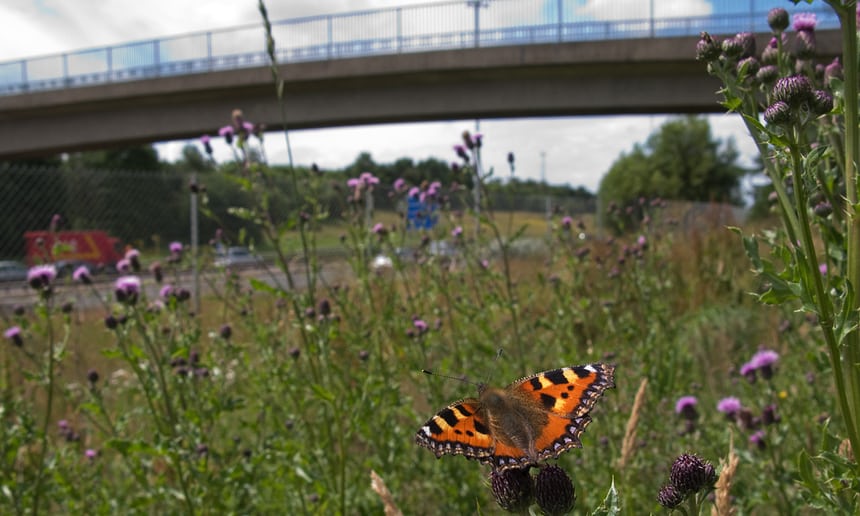
Flutter bye: where did all the city butterflies go? (The Guardian)

Numbers of common British butterflies have fallen by 69% in cities and towns over the past two decades. Photograph: Cath Scott.

Clive Davies, chair of the EFUF International Steering Committee, comments on this article: Flutter bye: where did all the city butterflies go?

Having come to urban forestry and green infrastructure via the urban nature route I was very interested in this article. I think it is very important that those of us with any influence in these circles stress the importance of non-woody natural areas in urban forestry/GI planning and delivery. This means (i) stressing the importance of edge habitats, (ii) and glades and clearings, (iii) advocating sensitive management, (iv) avoiding the use of pesticides unless it is extremely justifiable and (v) intervening to ensure there is a diverse community of invertebrate friendly plants. The joy of urban forestry and urban GI is that we are also less fixated by species correctness – which is good news for butterflies.

Butterflies are vanishing from cities even faster than in the countryside – from paving, pesticides or just plain heat. But some cities are luring them back

Source: Flutter bye: where did all the city butterflies go? | Cities | The Guardian

State-wide i-Tree Canopy Survey

July Urban Forest Webinar Schedule

July UF Webinar Topics


Title:  Green Infrastructure – A Lesson in Change
Date & Time: Tuesday, 18 July, 6:00PM BST, 7:00PM CEST, 8:00PM EEST.
Green Infrastructure has been elevated as a means to an end for communities who are dealing with polluted run-off. From a design perspective, it has also been an agent of change in how urban foresters, engineers and landscape architects work together.

Donna Foster, a landscape architect with the USDA Forest Service, Northeastern State and Private Forestry, takes us on a journey of engagement and relationship building, exploring how past and present views on tree planting and design have merged while cultivating more respect and understanding between three professions as they work to reclaim unused lands, address environmental justice and create livable biologically functioning places in cities and towns across the nation.

Please access the webinar 15 minutes prior to the webinar’s start time. Enter as a Guest by typing your name in the name box and click the “Enter Room” button:

https://meeting.psu.edu/pacommunityforestry


Title: Cultivating and activating a natural infrastructure workforce
Date & Time: Wednesday, 19 July, 6:00PM BST, 7:00PM CEST, 8:00PM EEST.
Public demand has increased the need for natural innovations that make cities more environmentally friendly and more pleasant places to live. This demand has led to growth in the number of available entry-level jobs with some advancement potential, ranging from maintenance of urban gardens to installation of natural systems that manage stormwater flooding. Sara Lamback of Jobs for the Future will discuss the findings of the NatureWORKS project that identifies current and emerging trends in the green infrastructure workforce and examines the potential of these projects to spur job creation. Dave Gamstetter, Cincinatti Ohio Parks Department, will give illustrative examples of job training and job creation spurred by green infrastructure projects in Cincinnati, Ohio.

Connect to the webinar via the following link:   https://usfs.adobeconnect.com/ucf/


Title: Tree Growth and Response in a Changing Environment
Date & Time: Thursday, 20 July, 5:00PM BST, 6:00PM CEST, 7:00PM EEST.
Dr. Janusz Zwiazek, Professor and Tree Physiologist, University of Alberta, will discuss how trees grow and develop, and their response to changes in our climate and rapidly urbanizing landscapes. This is crucial information for the urban foresters, planners, designers and landscape architects who will be determining the Urban Forest of the future.

To attend, visit  www.joinwebinar.com and enter the ID code 759-113-739.

Urban Climate Report from the COST Action FP1204 GreenInUrbs conference in Orvieto, Italy from 4-7 April 2017

Urban Climate Report from the COST Action FP1204 GreenInUrbs conference in Orvieto, Italy from 4-7 April 2017

The European COST Action FP1204 GreenInUrbs 4-year project celebrated its conclusion in Orvieto, Italy with a conference that explored a trans-disciplinary approach to creating sustainable and livable urban centers. Many of the Keynote, Oral and Poster sessions discussed urban climate issues, directly and indirectly. A report, summarizing the urban climate issue-related presentations, has been featured in the Summer 2017 issue of Urban Climate News, published by the International Association for Urban Climate http://www.urban-climate.org/. In addition, the report contains links to the GreenInUrbs website as well as the Conference Book of Abstracts where all presentation abstracts can be viewed.

Green Infrastructure- Nature-Based Solutions for Sustainable and Resilient Cities

UK National Tree Officers Conference (Telford, 8Nov2017)

UK National Tree Officers Conference (Telford, 8Nov2017)

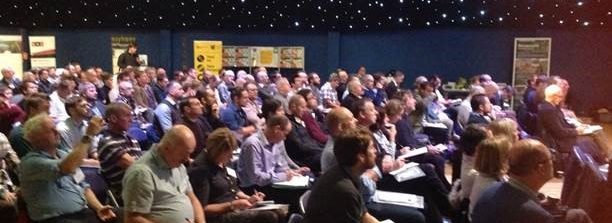
The National Tree Officers Conference is a unique gathering for professionals interested in all areas of local authority arboricultural work. This conference is crucial to tree, woodland and planning officers; provides a significant platform for future collaborations and partnerships; and offers latest research. It will demonstrate the best practice and innovation from arboricultural and urban forestry experts.

This year’s conference will focus on a range of influential topics from leading arboricultural and urban forestry professionals:

  • Planning Best Practice & Innovation
  • In-House or Out-Sourced
  • Innovation and Research
  • i-Tree Projects

This event is being organised by the London Tree Officers Association (LTOA), the Municipal Tree Officers Association (MTOA) and, the Institute of Chartered Foresters (ICF).

More information and registration: http://www.charteredforesters.org/event/tree-officers-conference-2017/

Last year’s delegates demonstrate, in the below quotes, the benefits and value of attending the only UK nationally dedicated Tree Officers conference.

“The National Tree Officers Conference was a fantastic event. It was brilliant to hear how much great work is being done by tree officers all over the country and to have the opportunity to share ideas and experiences with colleagues. I’m looking forward to the next one.” John Parker, Transport for London & Chair of the London Tree Officers Association (LTOA)

 “A comprehensive day that linked many of the burning issues tree officers deal with daily. Excellent value!” Jim Smith MICFor, National Urban Forestry Advisor, Forestry Commission England

 “A fully interactive and engaging day, excellent turn out and thought provoking day. “Matt Seabrook, Chair, Municipal Tree Officer’s Association (MTOA)

 “It was a great atmosphere at the conference, bringing together Tree officers from across the country to discuss best practice in arboriculture.” Al Smith MICFor, Arboricultural Manager, London Borough of Camden

“Great to hear Tree Officers sharing innovative approaches and ideas, and responding to the challenges they face.” Craig Harrison FICFor, London Manager, Forestry Commission

“The National Tree Officer Conference 2016 promoted idea exchange and an unparalleled opportunity for tree, woodland and planning officers to showcase their excellent work, managing local authority trees and woodlands for the benefits of the communities they serve. A key part of the event is having the ability to talk and share experiences with your peers.” Andy Lederer, Development Director, Institute of Chartered Foresters