
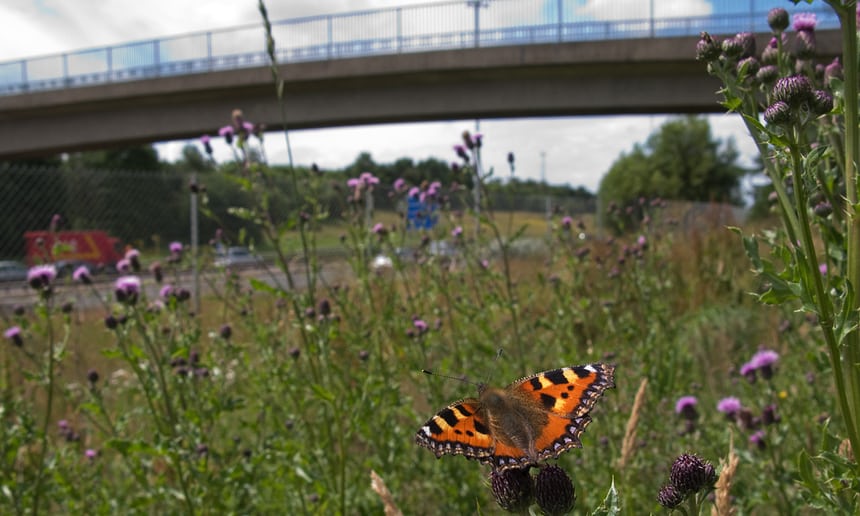
Numbers of common British butterflies have fallen by 69% in cities and towns over the past two decades. Photograph: Cath Scott.
Clive Davies, chair of the EFUF International Steering Committee, comments on this article: Flutter bye: where did all the city butterflies go?
Having come to urban forestry and green infrastructure via the urban nature route I was very interested in this article. I think it is very important that those of us with any influence in these circles stress the importance of non-woody natural areas in urban forestry/GI planning and delivery. This means (i) stressing the importance of edge habitats, (ii) and glades and clearings, (iii) advocating sensitive management, (iv) avoiding the use of pesticides unless it is extremely justifiable and (v) intervening to ensure there is a diverse community of invertebrate friendly plants. The joy of urban forestry and urban GI is that we are also less fixated by species correctness – which is good news for butterflies.
Butterflies are vanishing from cities even faster than in the countryside – from paving, pesticides or just plain heat. But some cities are luring them back
Source: Flutter bye: where did all the city butterflies go? | Cities | The Guardian