Professor Greg Watts, University of Bradford UK, and his research team have developed TRAPT – Tranquility Rating Prediction Tool – a scientific process for measuring how relaxing urban environments and public spaces are.
Having come to urban forestry and green infrastructure via the urban nature route I was very interested in this article. I think it is very important that those of us with any influence in these circles stress the importance of non-woody natural areas in urban forestry/GI planning and delivery. This means (i) stressing the importance of edge habitats, (ii) and glades and clearings, (iii) advocating sensitive management, (iv) avoiding the use of pesticides unless it is extremely justifiable and (v) intervening to ensure there is a diverse community of invertebrate friendly plants. The joy of urban forestry and urban GI is that we are also less fixated by species correctness – which is good news for butterflies.
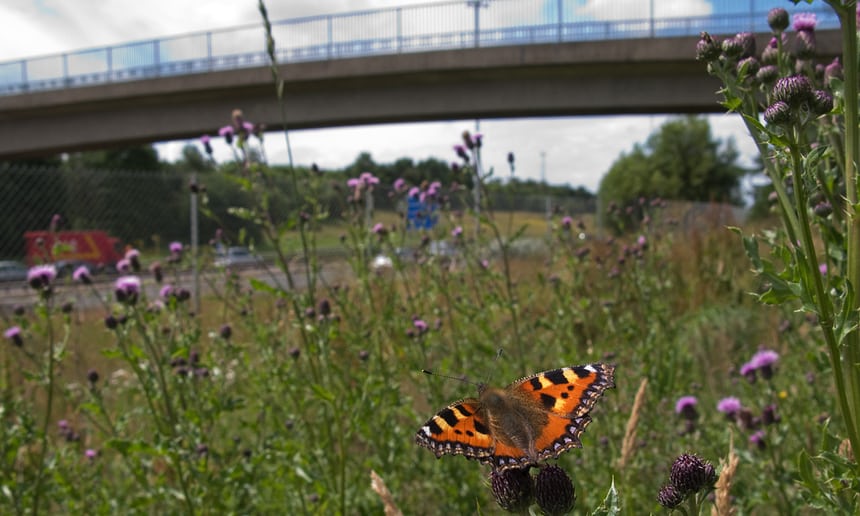
Butterflies are vanishing from cities even faster than in the countryside – from paving, pesticides or just plain heat. But some cities are luring them back
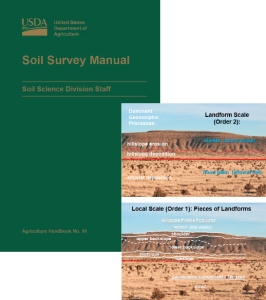
This newly updated Soil Survey Manual provides the major principles and practices needed for making and using soil surveys and for assembling and using related data. Although written by a US governmental agency, it contains information relevant to all issues related to soil, regardless of locale.
The complete Soil Survey Manual and / or individual chapters are available as a pdf download at the following link:
https://www.nrcs.usda.gov/wps/portal/nrcs/detailfull/soils/ref/?cid=nrcs142p2_054262
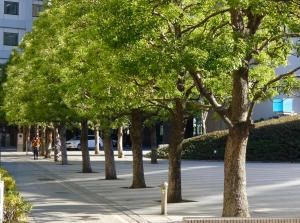
Trees can make a city sidewalk prettier, sure. But that’s not even their best trick. A growing pile of research suggests that planting more urban trees, if done right, could save tens of thousands of lives around the world each year — by soaking up pollution and cooling down deadly heat waves.
In fact, as a fascinating new report from the Nature Conservancy details, a well-targeted tree campaign could be of the smartest investments a hot, polluted city can make. Which seems important, given that the world’s cities will add about 2 billion people this century, and they’re only getting hotter.
“A lot of cities still think of trees as just ornamentation,” says Rob McDonald, the lead scientist for the Nature Conservancy’s Global Cities program and a co-author of the report. “But they really do so much more than that. And the evidence suggests that we should start thinking of trees as a crucial part of our public-health infrastructure.”