by Rik De Vreese | Sep 5, 2018 | Events
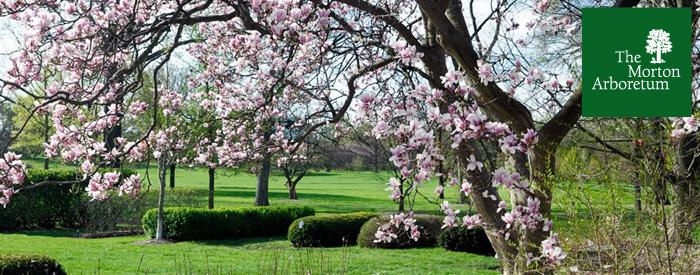
Barcham Trees PLC, a UK-based tree nursery, and the Municipal Tree Officer’s Association (MTOA) organised a practical seminar on tree planting in urban spaces.
More information: https://mailchi.mp/barchamtrees/free-seminar-3313177?e=3af7f04cc0

by Rik De Vreese | Aug 20, 2018 | Articles

Inauguration EFI Bonn Office (European Forest Institute) 29/08/2017 Credits: Jennifer Zumbusch.
UNECE/FAO published a discussion paper on “Green Jobs in the Forest Sector” . The study provides an overview of existing Green Forest Jobs and identifies possible areas for future activities and jobs in the forest sector, and may serve as starting point for further analysis and discussion on the future of Green Forest Jobs. It offers a framework for classifying Green Forest Jobs under seven thematic work areas, outlined in the seven main sections of the study, with a particular focus on major trends, needs and challenges as well as opportunities and prospects for the forest sector. Urban foresters will be mainly interested in the work area “Social and Urban Development” (including Urban Forestry, Arboriculture, and a “Culture and Forests” section), but also the section on “Health and Recreation” is a must-read.
Urban forestry practitioners not only need to design and manage healthy, stable, attractive and accessible urban forests able to cope with different demands, but they also have to promote and improve the understanding and acceptance of forests and forest management in urban settings.
The paper refers to Manchester, where an estimated corps of 15.000 urban foresters (in the broad sense) are providing forest-related services (forest product processing, tourism and forestry-related services).
Urban foresters’ skills and expertise are not only challenged from a technical point of view (e.g. diverging soil conditions, specific species, pavements, health issues), but they also need to know how to interact with the public, decision-makers and other professionals. As urban trees grow at people’s doorstep, the community holds a close look to the management of a city’s forets and trees.
The urban forestry chapter ends with a very interesting list of key competences and skills an urban forester needs:
- Communication skills for managing complex stakeholder relations
- Public relation skills for interacting with residents
- Competencies in planning, designing, managing and maintenance of trees and forests
- Comprehensive knowledge and competencies in ecology, forestry, agroforestry, ecosystem functioning, ecosystem services and their valuation, climate change, tree care, economic and social issues related to health care, recreation and leisure and environmental education

by Rik De Vreese | Apr 29, 2018 | EFUF2018

“Increasing cities, decreasing green areas – challenge to urban green professionals: Urban green planning, management and participation with residents”
Dear EFUF fellows,
EFUF2018 is about to be kicked-off in Helsinki. We are very keen that our Finnish colleagues have organised this year’s forum as Helsinki has always been a frontrunner city in the urban forestry scene. You can find the updated programme on https://www.efuf2018.com/scientific-program.
There are also still tickets available for the gala dinner (boat cruise) and the post-conference excursion on Saturday 19 May.
The organisers will close all registrations on 2 May 2018. Enrol now and ensure your seat at EFUF2018.
This is your last chance to register yourself.

by Rik De Vreese | Sep 12, 2017 | Events

Next week, one of the largest conferences on forest research will take place in Freiburg (Germany). The International Union of Forest Research Organisations (IUFRO) organised this conference for its 125th anniversary, and the attendance is way beyond the expectations.
The final programme is now available, and we like to point out some sessions of specific interest to the urban forestry community, and the European Forum on Urban Forestry in particular.
Boris Rantaša (Slovenian Forestry Institute), who was leading the communications team for EFUF2016, will present the case of the 2016 edition of the European Forum of Urban Forestry as an illustration on how to promote a forestry conference in the era of social media (abstract). The presentation will offer a methodological approach on communicating a forestry conference using a social media team. This talk is part of the session 174 D9 (Connecting People to Forest Science: Innovative Communication Approaches for Delivering Science) on Wednesday 20 September, between 18:00 and 19:30 in room KG I – 1009 (University Freiburg).
Sub-plenary session SP3 on Forests in cities and in wilderness offer recreation and health benefits (Thursday 21 Sep, 13:30 – 15:00, in room KG I – 1010 at University Freiburg) features two speakers well-known to EFUF attendants. Mathilda van den Bosch (UBC, Canada) will discuss challenges and prospects for urban forests and public health (abstract). Arne Arnberger (ILEN, Austria) will discuss the benefits of visitor monitoring for society and agencies managing natural resources. This session will be livestreamed on http://www.life.iufro2017.com for free.
A dedicated session on urban forestry (Session 69 D6 – Urban forestry for quality of life – the impacts of research on everyday practices) is planned on Friday 22 September, 15:30 – 17:30 (in room KG I – 1199 at University Freiburg). This session includes
- Marcus Hedblom (SLU, Sweden) – Urban forest as biodiversity hotspots: dead wood, birds and human perception (abstract)
- Wendy Chen (University of Hong Kong) -Strategic interaction in municipal governments’ provision of public green spaces: a dynamic spatial panel data analysis in transitional China (abstract)
- Nathalie Gulsrud (University of Copenhagen, Denmark) – Innovative urban forestry governance in Melbourne?: unpacking the implications of “green place-making” as a Nature-Based Solution (abstract)
- Richard Hauer (University of Winconsin, United States of America) – Municipal Forestry and Management in the United States: An Urban & Community Forestry Census of the United States (abstract)
- Alan Simson (Leeds Beckett University, United Kingdom) – The Role of Urban Forestry in delivering Resilient Urban Futures, with a focus upon the Leeds City Region, UK. (abstract)
- Mathilda van den Bosch (UBC, Canada) – Urban forestry and human health (abstract)
Many more interesting presentations and posters are off-course scheduled. The organisers provide livestream of selected sessions through http://www.live.iufro2017.com.
by Rik De Vreese | Aug 2, 2017 | Events
City of trees.
Bringing trees to the people of Greater Manchester
A seminar with Peter Stringer, Brian Cosgrove, Ben Iles-Smith and Miranda Clarke.
30th Aug at Barcham Trees
9.00am – Registration and tea / coffee refreshments
9.30am – 9.35am – Welcome to the day and ‘My Tree Rocks Challenge’ – Pete Stringer
9.35am – 10.00am – City of Trees a new movement for Greater Manchester – Pete Stringer
10.00am – 10.20am – An evidence based mapping approach to tree planting – Bryan Cosgrove
10.20am – 11.00am – Workshop 1 – Exploring your local Tree Heritage
11.00am – 11.20am – Tea break
11.20am – 11.50am – Green Streets – Turning the streets from grey to green – Pete Stringer
11.50am – 12.30pm – Workshop 2 – Every tree tells a story
12.30pm – 1.30pm – Lunch and opportunity to visit nursery
1.30pm – 2.00pm – What Have Trees Ever Done for us? Demonstration & research – Pete Stringer
2.00pm – 2.40pm – Workshop & Tea Break – Mocktail making, an ice breaker for community engagement
2.40pm – 3.00pm – Of the people by the people for the people – Community Woodland Management – Bryan Cosgrove (includes
Citizen Forester)
3.00pm – 3.20pm – Question and answers to the team
3.20pm – 3.30pm – Summary, winner of ‘My Tree Rocks’ challenge and close
Please see for full details http://www.barchampro.co.uk/sites/default/files/6_city_of_trees_30th_aug.pdf
To register your interest please email natasha@barchamtrees.co.uk
or Click Here
