
by Naomi Zürcher | Feb 26, 2018 | EFUF2018
“Increasing cities, decreasing green areas – challenge to urban green professionals:
Urban green planning, management and participation with residents”
Dear EFUF Colleagues:
The clock, as always, is running and the deadline for EFUF 2018 abstract submission – 10 March – is just 2 short weeks away. If you are considering making a presentation, please review the abstract submission information via the following link:
https://www.efuf2018.com/registration-abstract-submission
Abstracts can be submitted here:
https://ilmo.contio.fi/nexttravelabstract/abstract.aspx
We have planned a very exciting Forum in Helsinki / Vantaa and we are looking forward to welcoming you to our Urban Forest. Please find information about the program here:
https://www.efuf2018.com/scientific-program
Hope to see all of you in Helsinki on the 15th of May.
Best regards
EFUF 2018 Organizing Committee
![Urban Forests in a European Perspective Workshop Registration Extended]()
by Naomi Zürcher | Feb 13, 2018 | Events
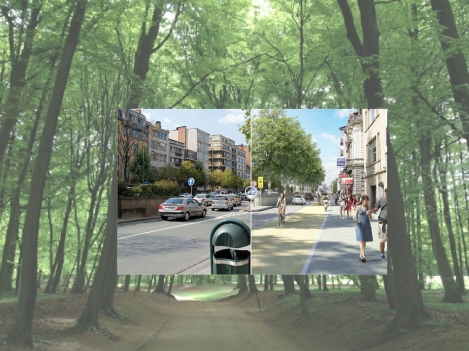
Brussels Urban Forest
Dear EFUF Colleagues;
Please note that the registration deadline for this important workshop has been extended until Thursday the 1st of March. Incorporating our urban trees into every country’s National Forest Inventory is extremely critical to the advancement of sustainable Urban Forest Management as well as traditional Forest health. If we are to accomplish this constructively and collaboratively, we need your Urban Forest knowledge and your presence.
Title: Urban Forests in a European Perspective: what can the National Forest inventory tell us?
Date: 15 March 2018
Where: The European Forestry House, Brussells
This workshop is organized by the European Environment Agency and the SNS and EFINORD funded network to bring together Practitioners, Researchers and Policy Makers from the 8 participating European nations and beyond as well as the European Environmental Agency, and the European Commission to discuss opportunities for integrating the use, management, and governance of urban forests and woodlands to promote health and well-being outcomes for humans and trees alike. More details regarding the network and its focus can be found at this link:
UFNR
and additional workshop information / schedule can be found here:
Urban Forests in a European Perspective_Brussels extended registration invite
Based on the workshop discussions, we intend to produce a summary of the key challenges and opportunities associated with the integrated multi-level governance of urban forests and woodlands to promote human health and well-being outcomes. This summary will form the basis for future collaborations on research or innovative projects and thus will influence synergies between urban forests and woodlands and broader urban environmental planning and management agendas at a local, national, and European level.
Please RSVP to nagu@ign.ku.dk<mailto:nagu@ign.ku.dk> by 1 March 2018.
![Urban Forests in a European Perspective Workshop Registration Extended]()
by Naomi Zürcher | Jan 29, 2018 | Events

02.18 Urban Forestry Webinars
Dear Colleagues:
Following, please find the upcoming schedule for February’s Urban Forestry Webinar offerings, especially the 01 February entry which will be presented by our very own Cecil Konijnendijk – not to be missed:
Title: Urban Forests for Urban Futures: How Trees Create Better Cities
Date & Time: Thursday, 01 February, 5:00PM BST, 6:00PM CEST, 7:00PM EEST.
Join EFUF’s very own Professor Cecil Konijnendijk, Ph.D. for an in-depth exploration of the Urban Forest’s contribution to creating and sustaining healthy, livable cities globally.
Presenter: Professor Cecil Konijnendijk, Ph.D., University of British Columbia, Canada
Where: Visit www.joinwebinar.com 15 minutes prior to start time and enter the ID code: 901-377-419
Title: i-Tree Instructional Workshop – an i-Tree Applications Showcase
Date & Time: Thursday, 22 February, 6:00PM BST, 7:00PM CEST, 8:00PM EEST.
Join the i-Tree Development Team and Partners for this informative discussion on what has been added to the i-Tree toolkit. These new additions will enhance urban forestry inventories, analyses and reporting, making these tasks easier and more efficient. In addition, i-Tree Harvest, Planting, MyTree and other additions will be discussed along with improvements to Landscape, Species and Eco.
Presenter: USDA Forest Service and Davey Tree
Where: PRE-REGISTRATION is required for this session in order to provide the most streamlined user experience. Please visit:
https://goo.gl/8iBdsF

by Naomi Zürcher | Jan 18, 2018 | EFUF2018
Helsinki’s Urban Forest
Dear EFUF Colleagues:
What you’ve all been waiting for – EFUF 2018:
“Increasing cities, decreasing green areas – challenge to urban green professionals:
Urban green planning, management and participation with residents”
The EFUF 2018 Forum website, complete with program, conference detail, registration and abstract submission information, is now up and running and waiting for your visit at:
https://www.efuf2018.com/home
We have planned a very exciting Forum in Helsinki / Vantaa and we are looking forward to welcoming you to our Urban Forest. Please find important dates here:
EFUF 2018
Hope to see all of you in Helsinki , 15 – 19 May 2018.
Best regards
EFUF 2018 Organizing Committee
by Naomi Zürcher | Jan 15, 2018 | Events
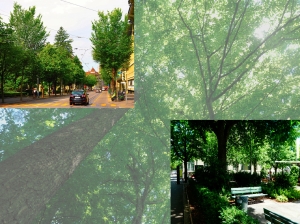
i-Tree Switzerland:
Bern Bundesgasse / kleine Schanze
photo credit Bernasconi and Zürcher
The planned Spring 2018 release of i-Tree Eco for all of Europe inspired a Swiss Urban Forest
collaboration between Pan Bern AG (Andreas Bernasconi and his team, Marlén Gubsch and
Florim Sabani) and Arbor Aegis (Naomi Zürcher). The collaboration, which began in July 2016,
expanded to include Dr. David Nowak, USDA Forest Service i-Tree Project Leader and the
inspiration behind i-Tree…
The Value of i-Tree Valuation – Bern Switzerland
![Urban Forests in a European Perspective Workshop Registration Extended]()
by Naomi Zürcher | Jan 5, 2018 | Events

January 2018 UF Webinar Themes
Title: Making Urban Forests Count: Quantifying and crediting storm water benefits
Date & Time: Wednesday, 10 January, 6:00PM BST, 7:00PM CEST, 8:00PM EEST.
The water quality benefits of forests are widely accepted, yet very few studies have successfully quantified the runoff and pollutant-reducing impacts of trees in the urban landscape. Uncertainty as to how to “credit” urban trees – everything from individual street trees up to small patches of forest – for runoff and pollutant load reduction has hampered their use as a stormwater Best Management Practice (BMP). In this webinar, Karen Cappiella and Justin Hynicka will review the available stormwater crediting systems for urban tree plantings and will present a new crediting system that can be integrated into state and local compliance systems for stormwater management, Total Maximum Daily Loads (TMDLs), and other water quality requirements. The presenters will share a case study example of how this crediting framework has been formally adopted by state and federal agencies as part of the Chesapeake Bay TMDL, which covers 64,000 square miles across six states and Washington District of Columbia.
Presenters: Karen Cappiella, Center for Watershed Protection; Justin Hynicka, American Forests
Where: Visit https://usfs.adobeconnect.com/ucf/ 15 minutes prior to start time.
Title: Green Stormwater Infrastructure Use to Control Combined Sewer Overflows
Date & Time: Tuesday, 16 January, 7:00PM BST, 8:00PM CEST, 9:00PM EEST.
ANSI is the acronym for the American National Standards Institute. It is the entity to whom American professional institutions submit their professional Standards. Pruning Standards form the base for the specifications that are used in management. While we in Europe may not have such an entity and while many of our countries may not have any Standards, this webinar may offer critical food for thought in planning for the development of this important management tool. Join Julianne Schieffer as she reviews the A300 Standards and discusses how they will impact tree health and industry specifications
Presenter: Julianne Schieffer, Urban Forester, Penn State Extension
Where: Visit https://meeting.psu.edu/pacommunityforestry 15 minutes prior to start time. Enter the webinar as a guest by typing your name in the name box and click the “Enter Room” button.
Title: i-Tree Instructional Workshop: Looking Toward Tomorrow Round Table Discussion
Date & Time: Thursday, 18 January, 6:00PM BST, 7:00PM CEST, 8:00PM EEST.
Join the i-Tree Development Team and Partners for this informative discussion on what is on tap for upcoming enhancements to the software tools. More importantly, it’s an opportunity to offer your feedback on what you would like to see included in future updates. This is a great chance to speak directly with the programmers, project managers and team members who are working to make i-Tree a valuable a tool in your assessment and management toolkit. Please plan to join the i-Tree Developers for this expanded session, which will last 90-minutes.
Presenter: USDA Forest Service and Davey Tree
Where: PRE-REGISTRATION is required for this session in order to provide the most streamlined user experience. Please visit:
https://goo.gl/jNFxcE
![Urban Forests in a European Perspective Workshop Registration Extended]()
by Naomi Zürcher | Dec 11, 2017 | Events

12.17 Urban Forestry webinar schedule
Title: Tree Selection for the 21st Century
Date & Time: Wednesday, 13 December, 6:00PM BST, 7:00PM CEST, 8:00PM EEST.
Urban forestry and its vast array of BPM-driven tools offers an important strategy for increasing tree canopy, managing stormwater, and capturing carbon. Selecting trees to provide these services requires science-based information on the relative performance of different species over time within the context of a changing climate. In this webinar, Greg McPherson presents new research findings on climate-ready tree evaluation, urban tree biometrics, and surface water storage capacity to illustrate differences among species. On the eve of his retirement from the USDA Forest Service, Greg will also share his observations regarding urban forestry’s most memorable events, intrepid leaders, and ground-breaking research.
Presenter: Greg McPherson, USDA Forest Service
Where: Visit https://usfs.adobeconnect.com/ucf/ 15 minutes prior to start time.
Title: Pruning Practices to Manage Risk and Enhance Wildlife
Date & Time: Thursday 14 December, 5:00PM BST, 6:00PM CEST, 7:00PM EEST.
Pruning is an essential part of any Urban Forest Management plan or strategy. Join Mark Reiland, UMasss, as he outlines how common pruning practices can be used to both mitigate risks associated with urban trees and also have a positive influence on urban ecology and wildlife habitat.
Presenter: Mark Reiland, UMass Department of Environmental Conservation
Where: Visit www.joinwebinar.com 15 minutes prior to start time and enter the ID code: 491-732-747
Title: i-Tree Instructional Workshop: Using i-Tree Tools for Street Tree Inventories
Date & Time: Thursday, 14 December, 6:00PM BST, 7:00PM CEST, 8:00PM EEST.
This December’s i-Tree instructional workshop will review the tools which i-Tree has available for the Urban Forest Manager – analytical tools that use tree inventory data to quantify the dollar value of annual environmental and aesthetic benefits including energy conservation, air quality improvement, CO2 reduction, storm water control and thus enable more effective management of this invaluable resource – our Urban Forest.
Presenter: USDA Forest Service and Davey Tree
Where: PRE-REGISTRATION is required for this session in order to provide the most streamlined user experience. Please visit:
https://goo.gl/1EjAgh
Title: A Professional Interpretation of ANSI A300 Pruning Standard Updates
Date & Time: Tuesday, 19 December, 5:00PM BST, 6:00PM CEST, 7:00PM EEST.
ANSI is the acronym for the American National Standards Institute. It is the entity to whom professional institutions submit their professional Standards. Pruning Standards form the base for the specifications that are used in management. While we, in Europe, may not have such an entity and while many of our countries may not have any Standards, this webinar may offer critical food for thought in planning for the development of this important management tool. Join Julianne Schieffer as she reviews the A300 Standards and discusses how they will impact tree health and industry specifications
Presenter: Julianne Schieffer, Urban Forester, Penn State Extension
Where: Visit https://meeting.psu.edu/pacommunityforestry 15 minutes prior to start time. Enter the webinar as a guest by typing your name in the name box and click the “Enter Room” button.

by Naomi Zürcher | Nov 8, 2017 | Articles
Source: Bryant C. Scharenbroch, David Carter, Margaret Bialecki, Robert Fahey, LukeScheberl, Michelle Catania, Lara A.Roman, Nina Bassuk, Richard W.Harper, Les Werner, Alan Siewert, Stephanie Miller, Lucy Hutyra, Steve Raciti, “A rapid urban site index for assessing the quality of street tree planting sites,” Urban Forestry & Urban Greening
Stevens Point, WI (September 6, 2017) – Urban trees experience site-induced stress and this leads to reduced growth and health. To help urban forest managers to better match species tolerances and site qualities, a rapid assessment tool has been developed and field tested.
A site assessment tool can be useful to urban forest managers to improve the matching of species tolerances to site qualities, and to assess the efficacy of soil management actions.
Toward this goal, a rapid urban site index (RUSI) model was created and tested for its ability to predict urban tree performance.
The RUSI model is a field-based assessment tool that scores 15 parameters in approximately five minutes. This research was conducted in eight cities throughout the Midwest and Northeast USA to test the efficacy of the RUSI model.
The RUSI model accurately predicted urban tree health and growth metrics (P < 0.0001; R2 0.18–0.40). While the RUSI model did not accurately predict mean diameter growth, it was significantly correlated with recent diameter growth. Certain parameters in the RUSI model, such as estimated rooting area, soil structure and aggregate stability appeared to be more important than other parameters, such as growing degree days.
Minimal improvements in the RUSI model were achieved by adding soil laboratory analyses. Field assessments in the RUSI model were significantly correlated with similar laboratory analyses. Other users may be able to use the RUSI model to assess urban tree planting sites (<5 min per site and no laboratory analyses fee), but training will be required to accurately utilize the model.
Future work on the RUSI model will include developing training modules and testing across a wider geographic area with more urban tree species and urban sites.

by Naomi Zürcher | Nov 8, 2017 | Articles
land–atmosphere interactions from natural and anthropogenic land-use and land-cover change (LULCC) contributions to radiative forcing. (Figure source: Ward et al. 2014 )
In spite of the current US government’s denial of climate change and all the actions that have recently been taken to reinforce that idea, 13 Federal Agencies have just released the First Volume of an authoritative assessment of the science of climate change, mandated by the Global Change Research Act of 1990:
https://science2017.globalchange.gov/
The report clearly documents the following:
“Global annually averaged surface air temperature has increased by about 1.8°F (1.0°C) over the last 115 years (1901–2016). This period is now the warmest in the history of modern civilization. The last few years have also seen record-breaking, climate-related weather extremes, and the last three years have been the warmest years on record for the globe. These trends are expected to continue over climate timescales.
This assessment concludes, based on extensive evidence, that it is extremely likely that human activities, especially emissions of greenhouse gases, are the dominant cause of the observed warming since the mid-20th century. For the warming over the last century, there is no convincing alternative explanation supported by the extent of the observational evidence.
In addition to warming, many other aspects of global climate are changing, primarily in response to human activities. Thousands of studies conducted by researchers around the world have documented changes in surface, atmospheric, and oceanic temperatures; melting glaciers; diminishing snow cover; shrinking sea ice; rising sea levels; ocean acidification; and increasing atmospheric water vapor…”
While the focus is the United States, there is much information contained within that is worthy of global dissemination and review, e.g. for those of us concerned with the dramatic shift climate change will have on our urban tree planting palettes, Chapter 10 may be of special interest.
![Urban Forests in a European Perspective Workshop Registration Extended]()
by Naomi Zürcher | Oct 31, 2017 | Events

11.17 Urban Forestry webinar
Title: Urban Forest Master Plans
Date & Time: Wednesday, 1 November, 5:00PM BST, 6:00PM CEST, 7:00PM EEST.
Join Josh Behounek for this one hour presentation that will discuss a variety of valid approaches to Urban Forest master planning using real case studies. Understand the difference between plan goals and outcomes, hear about planning methods and find out the tools that cities use to benchmark a municipal forestry program during this informative Webinar.
Participation in this Webinar has been pre-certified for 1 continuing education unit (CEU), applicable for ISA Certified Arborists, Municipal Specialists and BCMA Management.
Presenter: Josh Behounek, Urban Forestry Services Coordinator, Davey Resource Group
Where: PRE-REGISTRATION is required for this for this Webinar. Please visit:
https://www.anymeeting.com/AccountManager/RegEv.aspx?PIID=ED52DA82884739&utm_source=RC_eNews&utm_medium=email&utm_campaign=Oct2017_MasterPlanWebinar

 A site assessment tool can be useful to urban forest managers to improve the matching of species tolerances to site qualities, and to assess the efficacy of soil management actions.